

Spirituality can offer an important path toward growth, liberation, and connection to something deeper. However, sometimes in the name of spirituality we may end up overlooking essential aspects of our humanity, such as our emotions, needs, or wounds that require healing. Perhaps we have come to believe that this is what the spiritual path demands: “I should be able to let go” or “this shouldn’t affect me so much.” On the other hand, our psyche may—often unconsciously—use spirituality as a defense mechanism, helping us avoid opening up to the more difficult aspects of our humanity.
This relates to a phenomenon known as spiritual bypassing. In the following, I will take a closer look at what spiritual bypassing is and how it might be helpful to relate to it. I will also explore why and in what ways it is important to carry the different aspects of our humanity with us on the spiritual path.
Between spirituality and humanity
Spirituality can open us to dimensions beyond our everyday human experience. One may begin to sense something larger than this ‘small self’ we are used to identifying with. There may be new possibilities for experiencing oneself as less separate, caring more deeply for others, and perhaps revolving less around oneself. One may discover a sense of peace and well-being that does not depend on external circumstances or whether things go according to one’s wishes. There may also be glimpses of deeper meaning.
It is valuable to listen to the call toward spiritual directions. However, it becomes problematic if, at the same time, we end up bypassing our human nature—treating it as somehow less valuable, less true, irrelevant, or even wrong compared to spirituality.
The concept of spiritual bypassing originates from John Welwood, who has written, among other works, Toward a Psychology of Awakening. It refers to attempting, in the name of spirituality, to bypass or avoid something psychologically essential: emotions, needs, boundaries, our individuality, or our wounds. We may use spiritual practices for this purpose or justify the bypassing with spiritual ideas. We might also try to use spirituality to solve our psychological challenges. For example, a deep sense of inadequacy might be compensated for by identifying oneself as an advanced spiritual practitioner. Letting go of such an identity can be difficult, as it requires facing the underlying pain.
The spiritual fast lane
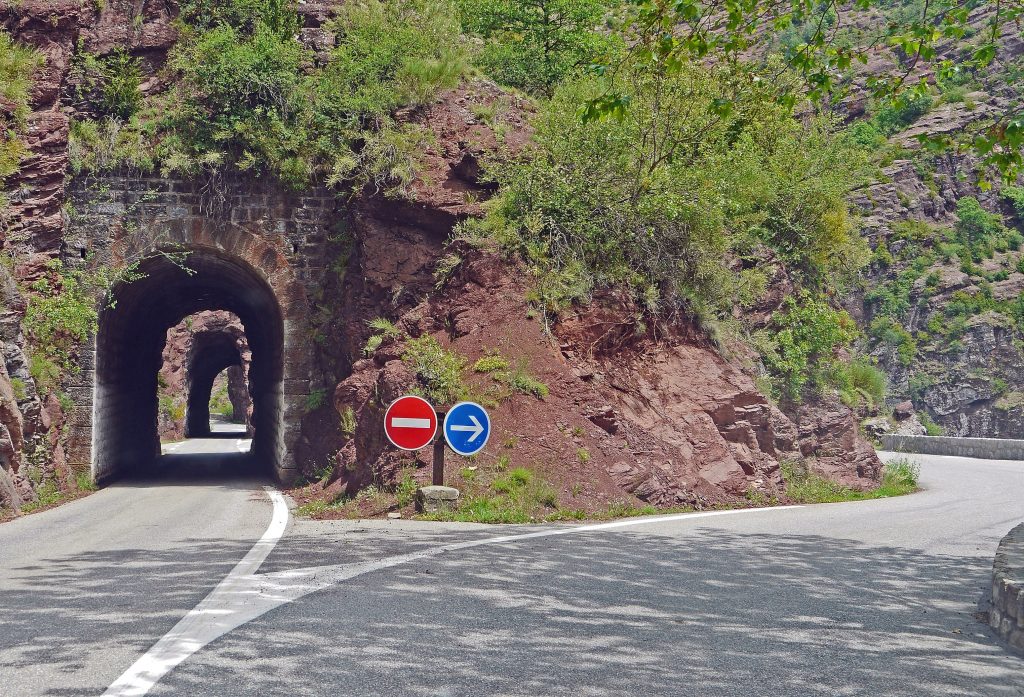
Spiritual bypassing can appear as an attempt to find a kind of fast lane—to skip ahead of where we actually are. The spiritual path may gradually take us in a certain direction, but we try to be there already. Welwood gives the example that although the spiritual path may gradually open up our natural compassion, trying to jump straight into compassion and bypassing feelings of anger often leads to problems. If we have learned to suppress our emotions or believe we do not feel anger at all, what may be most essential is to rediscover anger as part of ourselves, give it space, and perhaps learn to stand up for ourselves.
It is easy for ideals to form around spirituality—ideas of what we should be like: unwaveringly calm, always kind, forgiving, humble, or focused on others’ well-being. These ideals may involve misunderstandings about where the spiritual path leads, but at least they usually include an attempt to be there already.
My own experience is that what matters most is being exactly where one is and allowing space even for what might not easily be considered “spiritual”. Somewhere along my path, I experienced a sense that “I don’t really want anything for myself” Later it became important to recognize that this feeling was not entirely authentic. I realized it fit well with a deep belief I had: that nothing particularly good was available for me in the world, and that what mattered was being there for others. It has been important to open up to a strong, embodied sense of fully wanting something—whether wanting is “spiritual” or not.
How spiritual bypassing can show up
Robert Augustus Masters, in his book Spiritual Bypassing, sees the phenomenon as especially connected to the attempt to avoid facing something painful within us. He does not find it helpful to label certain emotions as negative and try to avoid experiencing them. Emotions have their place, and by skillfully facing our deep pain, we become freer to live more deeply, fully, and also more spiritually. Masters suggests that the calm brought by meditation may sometimes function like a numbing agent or sedative, keeping us slightly removed from our pain. We do not fully face it, even when we believe we are sitting with it.
Masters also writes about how we may become overly kind—perhaps to avoid conflict or because we believe that is how a spiritual person should be. We may try not to judge others and immediately turn our attention inward, asking what our sense of being hurt says about us, or what our role was in a situation. While this has value, it is also important to maintain healthy boundaries and not allow everything. It can be more compassionate toward others, too, to let them face the consequences of their actions. Anger is the emotion that supports us in setting and maintaining boundaries. Forgiveness cannot be rushed either; often many things need to happen before genuine forgiveness may be possible. For example, emotions like anger may need to be fully felt and expressed.

In spiritual contexts, people often talk about letting go of the ego, non-self, or transcending the small self. It is subtle what exactly constitutes a fruitful perspective on the self. Taking a combative stance within ourselves—for example, toward the ego—often leads to problems. Nor is it quite accurate to say there is no self at all. From such a perspective, one might easily bypass needs and boundaries with the idea that there is no one whose needs or limits matter.
Sometimes such interpretations resonate because they seem to offer solutions to our problems. Welwood gives the example of someone deeply concerned about being accepted by others. They were drawn to teachings of non-self—after all, if there is no self, there is no one to be judged positively or negatively. While this brought relief, the underlying wound remained unaddressed. Instead of relying on non-self, what was essential in this person’s growth was opening to the deep need to be seen and loved.
Even if spirituality opens something broader, the personal level should not be forgotten. Sometimes what is essential is to grow into oneself—to discover who one is. Not necessarily as fixed definitions, but for example as an embodied sense of one’s own presence. Each of us has a unique quality in our being and presence; this can be sensed, for instance, in someone we love. This too has value—not just some kind of impersonal, wider presence.
What does spiritual bypassing do to us?
In spiritual bypassing, something within us remains unmet and unprocessed. Essential steps in our growth may be skipped—we might need to learn to set boundaries, open to connection with others, discover who we are, or dare to be vulnerable and in need. Suppressed emotions may also manifest as physical symptoms, difficulty in simply being, or challenges in relationships.
When we do not face something within ourselves, it is often difficult for us to face it in others. We might fail to truly acknowledge others’ pain, for example by resorting to advice that sounds spiritual, such as “everything happens for a reason” or “just let go of difficult emotions.”
It can be especially challenging when something is pushed entirely out of awareness and not integrated into our sense of self. Often this involves qualities we do not want to identify with—such as anger, sense of superiority, or neediness. When something is pushed into the shadow, it often becomes more problematic and harmful. It takes energy to keep it out of awareness and maintain an identity in which it does not exist. We may project what is in the shadow onto others, and it may begin to seem, for example, as though everyone around us is angry. The shadow also tends to surface—often in less constructive ways.
These challenges may show up, for example, in the fact that even advanced spiritual teachers sometimes carry psychological wounds and patterns that can, in some cases, lead even to abusive situations. This often has to do with blind spots—unrecognized aspects of the self. Sometimes the spiritual path may even push something deeper into the shadow. Ken Wilber explains this in Integral Spirituality: meditation may help us not to identify with emotions like anger—to observe them rather than get lost in them. However, if we have not first owned our anger, recognized it as ours, and accepted it, such practices may instead further alienate us from it.

Directions forward
It is easy to slip into spiritual bypassing at some point along the spiritual path. Perhaps we all do this at times. There is no need to judge oneself for it; instead, it can be approached with compassion. One can also sense into where the need for bypassing arises. What wound within might be waiting to be met? Recognizing spiritual bypassing is valuable. It allows us to see what is happening without letting it steer us in the same way. Gradually, we can open more to our wounds and also to our shadow—with love.
In my view, it is quite subtle what directions are beneficial at any given time. It can be meaningful to explore this more closely in each person’s own situation. At times, opening to spiritual dimensions may be prioritized; at other times, making space for different aspects of our humanity is most important. Of course, needs and desires can also be overemphasized, or boundary-setting can become rigid and disconnecting rather than supportive of connection. In psychological work, we may also forget what the spiritual path can offer—such as the possibility of freedom here and now, even amidst challenges. Also, when life feels difficult and everything seems to revolve around that difficulty, a meaningful direction can sometimes be to engage in something where we can offer something valuable to others.
The way out of spiritual bypassing may be easier to find when we do not expect the spiritual path to take us somewhere entirely different—such as rescuing us from the fact that life is challenging. Perhaps the spiritual path can instead be seen as something that brings us more fully into this moment, more fully into our lives—more fully into being human. Gradually, we can become more at ease with everything that we are. As Masters says, there is no need to rush on the spiritual path. There is no need to look for fast lanes that ultimately only slow us down. When we feel we are on the right path, it feels good to walk it—the question of when we will arrive matters less.
References:
Masters, Robert Augustus (2010): Spiritual Bypassing: When Spirituality Disconnects Us from What Really Matters. Berkeley, California: North Atlantic Books.
Welwood, John (2000): Toward a Psychology of Awakening: Buddhism, Psychotherapy, and the Path of Personal and Spiritual Transformation. Boulder, Colorado: Shambhala Publications.
Wilber, Ken (2007): Integral Spirituality: A Startling New Role for Religion in the Modern and Postmodern World. Boston, Massachusetts: Shambhala Publications.
Also, see my previous writings that explore the borderlands between the spiritual and the psychological:
The spiritual dimension is also welcome in therapy
The relationship of meditation to psychological healing
I practice mindfulness-based therapy, where it is possible to engage with these themes as well.